ISO 1C
20ft Standard (TEU)
- Internal size5.90 × 2.35 × 2.39 m
- Volume≈ 33.2 m³
- Typical roleDense bagged commodities
 Terra Source Corp.From Source to the World
Request a quote

Port of Douala · Containerisation · Global movement
How we pack, document, and coordinate commodity exports—from the buyer brief and container plan to sailing documents and destination handoff.
The export gateway
Port and routing decisions are built into the commercial plan—not added after the order.
We coordinate the container format, packing, export readiness, carrier path, Incoterm responsibilities, and document release around the commodity and named destination. Port of Douala is the primary gateway; alternate routing may be discussed when volume, vessel availability, or shipment format warrants it.
Container specification
Final payload depends on product density, packing, legal weight limits, carrier restrictions, and route. The load plan is confirmed per quotation.
ISO 1C
ISO 1A High Cube
Temperature controlled
Liquid bulk
Vessel dependent
Commodity packaging
These are planning formats. Exact bag, liner, drum, pallet, treatment, weight, and labelling requirements are confirmed against the buyer brief.
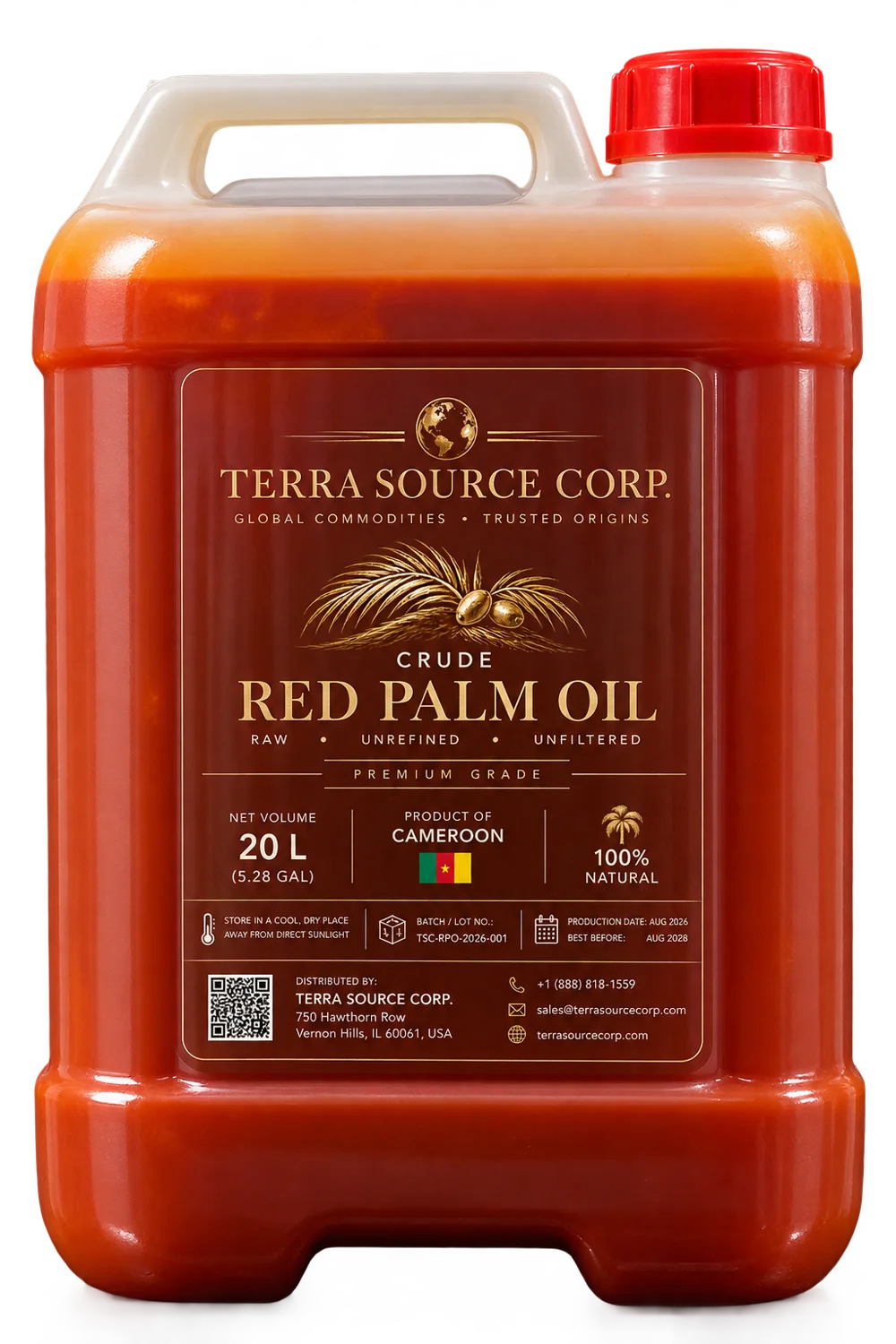
Crude red palm oil
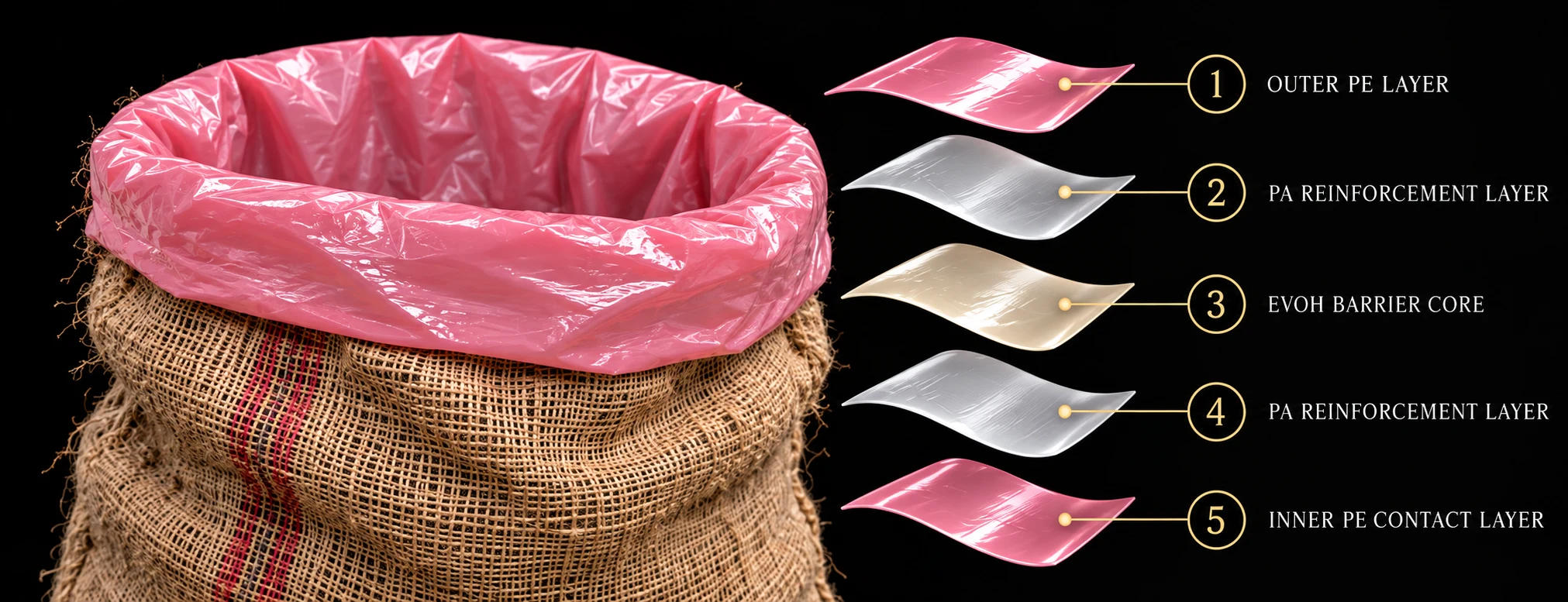
Green coffee & cocoa beans
With multilayer hermetic inner protection — a PE + PA + EVOH barrier structure with a heat-sealed hermetic closure, designed to help preserve the quality, aroma, and integrity of green coffee and cocoa beans throughout storage and international transport.
Our logistics network
Every role has a defined handoff. Service providers are selected according to the route, commodity, availability, and contract requirements.
Coordinate vessel booking, container positioning, port operations, and main carriage when included in the trade term.
Independent weight, condition, sampling, sealing, or quality verification when required by the buyer or contract.
Apply approved treatments and issue the related certificate when commodity and destination rules require it.
Carry the container under the issued transport document; selection balances schedule, rate, route, and transit time.
Support protected staging, final quality checks, container stuffing, and release coordination near the port.
Prepare and submit export declarations, permits, and terminal-release documents through the applicable systems.
Shipment timeline
Timing is indicative and begins after the agreed payment instrument is cleared or verified. Availability, inspection, carrier cut-offs, and customs can change the sequence.
Day 1
Funds clear or the documentary instrument is verified. The order is formally confirmed and allocation begins.
Days 2–5
The commodity is allocated, inspected, graded, and prepared against the approved specification.
Days 5–8
Cargo is packed, marked, treated where required, loaded to plan, and sealed with supporting records.
Days 8–12
Declarations and certificates are presented, terminal release is coordinated, and the booking is confirmed.
Days 12–16
The container is loaded aboard the nominated vessel. Voyage details and the available sailing milestone are shared.
Days 16–18
The agreed original or electronic document set is released according to the contract and banking instructions.
United States routing guide
Estimated port-to-port planning ranges from Cameroon. Add origin clearance, transshipment, destination port, customs, and inland-delivery time.
East Coast
Gulf Coast
West Coast
Transit windows are estimates, not guarantees. Final routing and timing depend on carrier schedule, transshipment, port congestion, weather, customs, and the contracted service.
Shipping intelligence
Fresh maritime headlines for procurement teams. Reporting is supplied by gCaptain and is independent of Terra Source.
Loading the latest shipping headlines…
Destination matters
Share the commodity, commercial volume, destination port, and target timing. We’ll map the shipment structure around the brief.
Request a Quote